
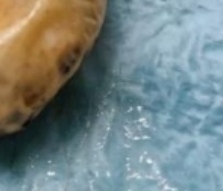
Discovering an unfamiliar object while tidying your child’s room can be unsettling—especially when it appears organic, unusual, or vaguely alive. The item you described—small, curved, fleshy, with a darkened tip—resembles a larva or grub. It’s completely natural to feel a flicker of concern. But before jumping to conclusions, it helps to approach the moment with calm curiosity and scientific perspective.
Most objects like this turn out to be harmless: insect larvae, pupal casings, or simply decayed organic matter. With proper handling, they pose no risk to human health. Let’s walk through what this likely is, how to respond, and how to prevent future surprises.
What This Object Most Likely Is
1. Insect Larva or Grub (Most Common)
The description strongly suggests an insect larva—possibly from a beetle, moth, or pantry pest species. These are frequently found in homes, especially in quiet, undisturbed areas.
Typical characteristics:
Creamy, beige, or off-white body with a curved, C-shaped form
A distinct, darker head capsule
Soft but slightly firm texture
Where they’re found:
Under beds, behind furniture, or along baseboards
Near food crumbs, pet food, or stored pantry items
In damp or humid areas, including wooden structures or carpet edges
Common species:
Carpet beetle larvae (feed on natural fibers like wool or cotton)
Mealworms or flour beetle larvae (attracted to grains or cereals)
Wood-boring beetle grubs (found in older furniture or structural wood)
These larvae are not dangerous to humans. They don’t bite, sting, or carry disease. Their presence usually signals a food source or moisture issue—not an infestation requiring alarm.
2. Food Residue or Decomposed Organic Matter
. Food Residue or Decomposed Organic Matter
Sometimes, ordinary items take on an unexpectedly biological appearance after drying, molding, or partial decomposition.
Possibilities include:
A dried cashew, peanut, or other nut fragment that has curled and darkened
Moldy fruit leather, dried cereal, or pet treat residue
Plant material (like a seed pod or stem) that has shriveled with age
Mold growth, oxidation, and moisture loss can dramatically alter texture and color, making harmless debris look strangely alive. If the object is brittle, crumbles easily, or has a faint food-like scent, it’s likely organic residue—not a living creature.
3. Parasite Misidentification (Very Unlikely)
It’s understandable to worry about parasites, especially when an object resembles a worm. But true parasitic worms (like intestinal nematodes) have distinct features:
Smooth, flexible, and uniform in color
No hard head capsule or segmentation
Typically found inside the body—not crawling on surfaces
If an object is discovered outside the body, on a floor, bed, or shelf, it is almost certainly not a human parasite. Insect larvae are far more common and pose no threat when handled with basic hygiene.
What to Do Right Now: A Calm, Practical Response
Avoid direct skin contact
Use disposable gloves, a tissue, or a paper towel to handle the object. This is standard precaution—not a sign of danger.
Clean the area thoroughly
Vacuum the immediate zone (under the bed, along baseboards, near storage) to remove any potential eggs, debris, or food residue. Wipe surfaces with a mild disinfectant.
Inspect the surroundings
Check nearby areas for similar objects, insect activity, or signs of moisture. Look under furniture, inside closets, and around food storage.
Dispose safely
Place the object in a sealed plastic bag and discard it in an outdoor trash bin. Wash your hands afterward.
Monitor, don’t panic
One isolated finding is rarely cause for concern. Keep an eye on the area over the next week or two.
Preventive Measures: Simple Steps for Long-Term Peace of Mind
Control moisture: Keep rooms well-ventilated and use a dehumidifier if needed. Insects thrive in damp, still air.
Store food securely: Keep snacks, pet food, and pantry items in airtight containers. Wipe up crumbs promptly.
Maintain regular cleaning: Vacuum carpets, wash bedding, and dust under furniture weekly. Pay attention to corners and hidden spaces.
Use natural deterrents: Sachets of lavender, cedar blocks, or a light spray of neem oil can help discourage insects without harsh chemicals.
Seal entry points: Check windows, doors, and baseboards for small gaps where insects might enter.
When to Seek Expert Help
Contact a pest control professional or local extension entomologist if:
You continue finding similar objects in multiple rooms
You notice live insects, webbing, or damage to fabrics or wood
You have concerns about allergies, asthma, or sensitive household members
A professional can identify the species, assess the extent of any issue, and recommend safe, targeted solutions.
Final Thought: Curiosity Over Fear
Finding something unexpected in your child’s space can trigger a rush of worry. But more often than not, these discoveries are ordinary moments in the life of a home—small reminders that we share our spaces with the quiet, unseen rhythms of nature.
The object you found is most likely an insect larva or a piece of decayed organic matter—neither of which is dangerous when handled with simple care. By responding calmly, cleaning thoughtfully, and maintaining a dry, tidy environment, you’re not just addressing a momentary surprise. You’re modeling for your child how to meet the unknown with reason, not fear.
And that
, perhaps, is the greatest lesson of all.